

Your Leading Fasteners Supplier
Baoding Sihedan Electric Technology Co.,Ltd is located at Baoding city Hebei Province China. It is a high-tech enterprise specializing in the design and production of Fasteners. Our fasteners come in many types, including bolts, nuts, washers, turnbuckles, etc. Fasteners are vital for the integrity of buildings, bridges, and infrastructure, offering resistance to weather, seismic forces, and heavy loads. The electronics industry relies on fasteners for assembling circuit boards, enclosures, and precision devices. In order to solve your technical problems more quickly, please call 0086-13968767426 or send email to info@dkline.net we will reply you in the first time.






Why Choose Us?
OEM & ODM Service
We especially have advantage on OEM and ODM of all electric Power fittings.
Advanced Facilities
We have specialized production workshops for machinery, forging, welding, stamping etc.
Global Market
Our Products are sold to USA, Malaysia, Bolivia, East Timor, England, Hong Kong, Camernoon, Kenya, Uganda etc.
Types of Fasteners

Bolts
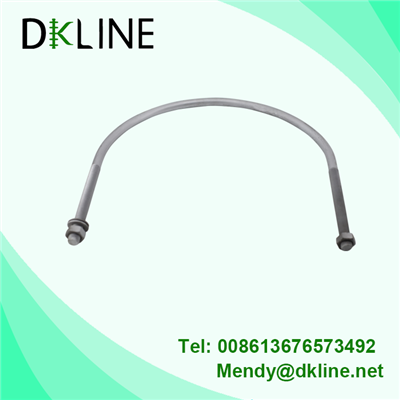
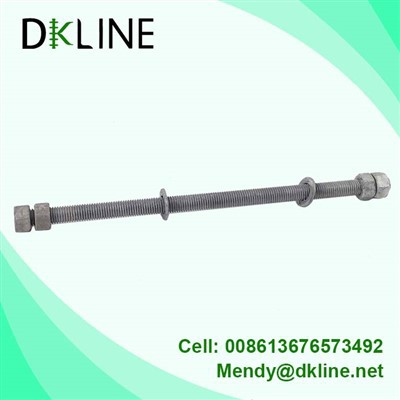
A bolt is an externally helical threaded fastener capable of being tightened or released by a twisting force (torque) to a matching nut. The bolt has an external male thread requiring a matching nut with a pre-formed female thread.

Nuts
Eye nuts are threaded fasteners with a looped head that can be affixed to a stud or bolt. Made of forged carbon steel or stainless steel, these lifting eyes are used with rope or cable for vertical lifting applications. They may also be used with tie downs and guiding wires.

Washers
A washer is a thin plate with a hole that is normally used to distribute the load of a threaded fastener, such as a bolt or nut. Other uses are as a spacer, spring, wear pad, preload indicating device, locking device, and to reduce vibration. Washers are usually metal or plastic.

Turnbuckles
A turnbuckle, stretching screw or bottlescrew is a device for adjusting the tension or length of ropes, cables, tie rods, and other tensioning systems. It normally consists of two threaded eye bolts, one screwed into each end of a small metal frame, one with a conventional right-hand thread and the other with a left-hand thread.
Standards for Fasteners
|
DIN Standard |
ISO Standard |
Product |
|
DIN 1 |
ISO 2339 |
Cone Pins, untempered |
|
DIN 125 |
ISO 7089 |
Washers; medium type, primarily for hexagon bolts |
|
DIN 125 |
ISO 7090 |
Washers; medium type, primarily for hexagon bolts |
|
DIN 126 |
ISO 7091 |
Product grade C washers - designed for use with Hexagon Head Bolts and Nut |
Functions of Fasteners
Corrosion Resistance
Stainless steel fasteners have exceptional corrosion-resistant properties. The presence of chromium in stainless steel helps in forming a superficial layer of oxide over the metal, which is the reason for the protection of the fasteners from rust and corrosion due to moisture. Hence, these fasteners possess an enhanced lifespan and ensure durability even in adverse environmental conditions.
High Strength and Durability
Stainless steel flanges ensure the longevity of any project. Hence, it is an investment. As we observed, these are corrosion-resistant, thus adding value to any project. There is no need for frequent repairs or replacements. These would perform well even when they are exposed to heavy loads or face harsh chemicals. These would retain structure, thus leading to a strong assembly.
Aesthetic Appeal
Stainless steel fasteners also offer an aesthetic advantage and, thus, are an ideal selection for commercial construction. Their inherent sturdiness and natural shine eliminate the need for additional decoration or paint. The shiny surfaces enhance the aesthetic appeal of the structures.
Temperature Resistance
Stainless steel fasteners exhibit excellent resistance to varied temperatures, making them apt for applications exposed to extreme heat or cold. This thermal stability ensures that the fasteners maintain their strength across a broad spectrum of environmental conditions.
Easy Maintenance
Another important feature of stainless steel fasteners is the requirement for minimum care and maintenance. These are capable of resisting stains and can be kept clean easily. These are an ideal solution, especially for applications where regular upkeep may be challenging. Ease of maintenance would also lead to cost-effectiveness over the long term.
Versatility in Diverse Applications
Stainless steel fasteners are versatile and can be used across many industries successfully, like construction, automotive, marine, aerospace, healthcare, and many other sectors. These fasteners are available in different dimensions and shapes to fulfill varied project requirements; hence, they are a preferred choice for engineers and builders.

Measurement of Fasteners
Only machine threaded fasteners (nuts, and screws/bolts that could take a nut) specify a thread count or thread pitch.
US fasteners specify threads per inch (TPI), commonly called thread count, so 20 would represent 20 threads per inch. Metric fasteners instead specify a thread pitch which is the distance between the threads. Therefore, a 1.5 pitch would have 1.5 millimeters between each thread.
Manufacturing Process of Fasteners
This includes operations such as cutting, drilling, turning, milling, and grinding to achieve the desired form. Unlike molding and casting, machining operates at room temperature or slightly above, with friction being the primary source of heat rather than an intentional heating process.
Cold forming, or cold roll forming, is a widely used method for producing fasteners due to its efficiency and minimal waste generation. Performed at or near room temperature, this method enables the rapid and cost-effective production of large quantities of fasteners. The pressure applied during cold forming preserves the metal's original grain structure, which enhances the tensile strength of the final product.
Hot forging is employed for producing fasteners when machining or cold forming are not suitable. During the forging process, the metal's grain structure is refined and homogenized, resulting in improved strength, ductility, and toughness.
Stamping is a cold forming process that molds metal sheets using a stamping press, similar to blanking and piercing. It can be performed in a single step or involve multiple stages, depending on the complexity of the part being created. One of the most commonly produced items through stamping is washers in various types and configurations.
Customizable Options
|
MOQ: |
There are no MOQ limit in first order, and 100pcs in further. |
|
Samples: |
We are providing the samples by free, but need pay for the freight charge. |
|
Material design and supply: |
We are supplying for LV and MV EPC material in lot many years. |
Application Scope of Fasteners
Construction
The growth of construction industries in various countries has increased the demand for fasteners in many parts of the world. Fasteners are required in so many aspects of construction – whether for residential, commercial, or industrial projects. The buildings, homes, and other structures rely heavily on the use of the proper fasteners provided by an industrial fastener supplier to ensure structural integrity and performance.
Automotive
The automotive industry utilizes many different types of fasteners in the production of cars, trucks, vans, and SUVs. These fasteners are often used to connect and secure vehicle components such as engine parts. Fasteners used in automobiles can be made from various materials including iron, iron and steel alloy, plastic, and other materials. They are also provided in various sizes, shapes, and colors.
Medical
The medical industry utilizes hundreds of different types of fasteners for its equipment, products, and accessories. Many medical devices contain very small components that depend on the effectiveness of only one or a few fasteners for proper function. These fasteners must be chosen carefully from an industrial fastener distributor to ensure the device works properly. The proper care and treatment of patients depends on it.
Payment Terms
|
1: |
We are accepting T/T and L/C payment terms. And FOB, CIF, CFR. |
|
2: |
Sample order: 100% payment before shipment. |
|
3: |
Bulk order: 50% deposit balance before shipment. |
Transportation

FAQ
Baoding Sihedan Electric Technology Co., Ltd. is well-known as one of the leading fasteners manufacturers and suppliers in China. Welcome to buy high quality fasteners at low price from our factory. Contact us for more discount information.
Fasteners, Pig Tail Bolts, Eye Nut