How to install an ADSS Dead End Clamp on a slanted tower?
Leave a message

Installing an ADSS (All-Dielectric Self-Supporting) dead end clamp on a slanted tower is a meticulous process that requires a thorough understanding of the equipment, safety protocols, and the unique challenges presented by the slanted structure. As a supplier of ADSS dead end clamps, I've witnessed firsthand the importance of proper installation to ensure the long - term performance and reliability of the optical fiber cable system. In this blog, I'll guide you through the step - by - step process of installing an ADSS dead end clamp on a slanted tower.
Pre - installation Preparations
Before starting the installation, it's crucial to conduct a comprehensive site survey. This survey should focus on the tower's specifications, including its angle of slant, height, and the environmental conditions at the site. Understanding the tower's angle is essential as it will affect the way the ADSS dead end clamp is installed and how it distributes the cable's tension.
You'll also need to gather all the necessary tools and equipment. This includes safety gear such as hard hats, safety harnesses, and non - conductive gloves. For the installation itself, you'll require wrenches, torque wrenches, cable cutters, and measuring tapes. Make sure all tools are in good working condition and calibrated correctly, especially the torque wrenches, as improper torque can lead to clamp failure.
Inspect the ADSS dead end clamp and the optical fiber cable thoroughly. Check for any signs of damage, such as cracks in the clamp or cuts in the cable. Any damaged components should be replaced before installation to avoid future issues.
Tower Access and Safety Setup
Once you've completed the pre - installation preparations, it's time to access the tower. If the tower is tall, you may need to use climbing equipment such as ladders or a cherry picker. Ensure that all climbing equipment is properly secured and rated for the weight and height requirements of the job.
Before ascending the tower, set up a fall protection system. Attach your safety harness to a secure anchor point on the tower. This anchor point should be able to withstand the forces exerted in the event of a fall. Also, establish a communication system with your ground crew so that you can stay in contact during the installation process.
Cable Positioning
Position the ADSS cable along the tower. Start by unspooling the cable carefully, making sure it doesn't get tangled. As the tower is slanted, you need to pay special attention to the cable's alignment. Use cable guides or pulleys to direct the cable along the tower's structure. The cable should be positioned in such a way that it follows the natural curve of the slanted tower without excessive bending or tension.
Measure the length of the cable that will be attached to the dead end clamp. Leave some extra length to account for any adjustments that may be needed during the installation. Mark the cable at the appropriate points to indicate where the clamp will be installed.
Dead End Clamp Assembly
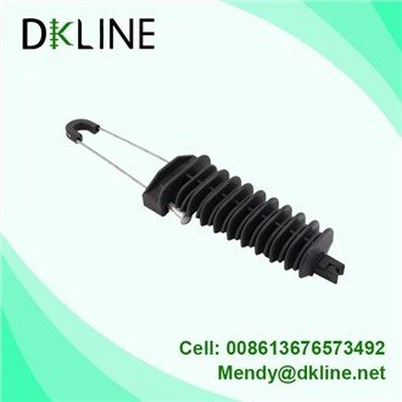
Now it's time to assemble the ADSS dead end clamp. Most ADSS dead end clamps come in multiple parts, including the main body, wedges, and bolts. Follow the manufacturer's instructions carefully when assembling the clamp.
Start by inserting the cable into the clamp's main body. Make sure the cable is centered and straight within the clamp. Then, insert the wedges into the clamp. The wedges are designed to grip the cable firmly and distribute the tension evenly. Tighten the bolts on the clamp using a torque wrench to the specified torque value. Over - tightening or under - tightening the bolts can compromise the clamp's performance.
Mounting the Clamp on the Tower
Once the clamp is assembled and attached to the cable, it's time to mount it on the slanted tower. Select a suitable mounting location on the tower. The location should be strong enough to support the weight and tension of the cable.
Use mounting brackets or bolts to attach the clamp to the tower. Make sure the clamp is level and properly aligned with the cable. On a slanted tower, this may require some adjustment to ensure that the cable is not under unnecessary stress. Check the alignment of the clamp from multiple angles to ensure its accuracy.
Tensioning the Cable
After mounting the clamp, it's time to tension the cable. Tensioning is a critical step as it ensures that the cable is properly supported and minimizes the risk of sagging or excessive movement. Use a tensioning device to gradually apply tension to the cable.
Monitor the tension closely using a tension meter. The tension should be within the recommended range specified by the cable and clamp manufacturers. On a slanted tower, the tension distribution may be uneven, so you may need to make some adjustments to ensure that the cable is evenly tensioned along its length.
Final Checks and Testing
Once the cable is tensioned, conduct a final inspection of the installation. Check all the bolts and connections to make sure they are tight. Inspect the cable for any signs of damage or excessive bending.
Perform some basic testing on the optical fiber cable to ensure its functionality. This may include using an optical time - domain reflectometer (OTDR) to measure the cable's loss and check for any breaks or faults. If any issues are detected, address them immediately before leaving the site.
Advantages of Our ADSS Dead End Clamps
As a supplier of ADSS dead end clamps, we take pride in offering high - quality products. Our clamps are made from durable materials that can withstand harsh environmental conditions, including extreme temperatures, humidity, and UV radiation. They are designed to provide a secure grip on the cable, ensuring reliable performance over the long term.
Our clamps are also easy to install, which can save you time and labor costs. We provide detailed installation instructions and offer technical support to ensure that you have a smooth installation process. Additionally, our products are competitively priced, offering you excellent value for your money.
Contact Us for Your ADSS Dead End Clamp Needs
If you're in the market for ADSS dead end clamps or need further assistance with the installation process, we're here to help. Our team of experts has extensive experience in the field and can provide you with the guidance and support you need. Whether you're working on a small - scale project or a large - scale telecommunications network, we have the right products to meet your requirements.
Don't hesitate to reach out to us to discuss your specific needs and get a quote. We're committed to providing you with the best products and services in the industry.
References
- IEEE Standards for Fiber Optic Cable Installation and Maintenance
- Manufacturer's Installation Guides for ADSS Dead End Clamps
- Safety Guidelines for Tower Climbing and Electrical Work