What are the disadvantages of using nails compared to screws?
Leave a message

Hey there! As a fasteners supplier, I've dealt with all sorts of hardware, and today I want to talk about the age - old debate between nails and screws. While nails have been around for ages and are still commonly used, there are several disadvantages to using them compared to screws. Let's dive right in.
1. Holding Power
One of the biggest drawbacks of nails is their relatively weaker holding power. Nails rely on friction to stay in place. When you hammer a nail into wood, the shank of the nail creates a tight fit with the surrounding wood fibers. But over time, this friction can decrease, especially if there's any movement or stress on the joint.
Screws, on the other hand, have threads that dig into the material. These threads create a mechanical bond that is much stronger than the friction - based hold of a nail. For example, in a load - bearing structure, a screw will hold up better under tension and shear forces. If you're building a bookshelf that will hold a lot of heavy books, using screws instead of nails will ensure that the structure remains stable for a longer time.
2. Ease of Removal and Adjustment
Removing a nail can be a real pain. When you try to pull out a nail, it often damages the surrounding material. The claw of a hammer can tear the wood fibers, leaving behind a ragged hole. And if the nail is deeply embedded or has been in place for a long time, it can be extremely difficult to extract.
Screws are much easier to remove. All you need is a screwdriver, and you can simply turn the screw counter - clockwise to take it out. This also makes it easier to make adjustments. Let's say you're building a piece of furniture and you realize that a joint isn't quite right. With screws, you can easily take them out, make the necessary adjustments, and then put the screws back in. It's a much cleaner and less destructive process compared to using nails.
3. Precision in Installation
Nails are not very precise when it comes to installation. Hammering a nail requires a certain amount of force, and it can be difficult to control the depth and angle of the nail. If you're working on a project that requires a high level of precision, like installing delicate trim or attaching small parts, it's easy to miss the mark with a nail.
Screws offer much more precision. You can control the speed and depth of insertion using a screwdriver or a power drill. This allows you to position the screw exactly where you want it, ensuring a more professional - looking finish. For instance, when installing a Driving Head For Ground Rod Earthing Products Accessories, precision is crucial, and screws are the better choice for this kind of task.
4. Resistance to Movement and Vibration
In environments where there is a lot of movement or vibration, nails are at a disadvantage. The constant movement can cause the nail to loosen over time. For example, in a vehicle or a piece of machinery, the vibrations can gradually work the nail loose, leading to a weakened joint.
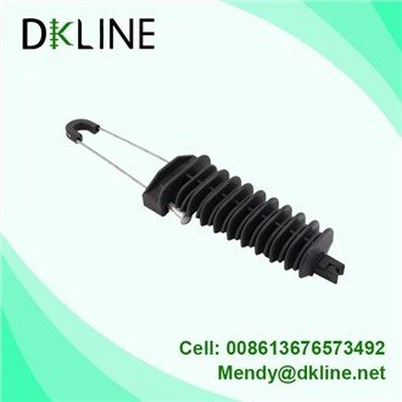
Screws are more resistant to movement and vibration. The threads of the screw grip the material tightly, preventing it from coming loose easily. In applications like the JNS Four(two) - core Bunched Cable Strain Clamp Series, where the clamp needs to stay firmly in place to support the cables, screws are a much better option than nails.
5. Long - Term Durability
Nails are more prone to rust and corrosion, especially if they are made of iron or steel. When a nail rusts, it can weaken the hold and also cause damage to the surrounding material. Rust can stain the wood and make it look unsightly.
Screws can be made from a variety of materials, including stainless steel, which is highly resistant to rust and corrosion. This makes them a better choice for outdoor applications or in environments where there is a lot of moisture. For example, in a FTTH Dead Ending installation, which may be exposed to the elements, using stainless - steel screws will ensure long - term durability.
6. Cost - Effectiveness in the Long Run
While nails are generally cheaper than screws upfront, in the long run, screws can be more cost - effective. Because of their stronger holding power, better resistance to movement and corrosion, and ease of removal and adjustment, you'll likely have fewer problems and need to make fewer repairs or replacements.
For example, if you use nails in a construction project and they start to loosen or rust over time, you'll have to spend time and money fixing the joints or replacing the nails. With screws, you're less likely to encounter these issues, which can save you both time and money in the long term.
Wrapping Up
So, as you can see, there are several disadvantages to using nails compared to screws. From holding power and ease of removal to precision in installation and long - term durability, screws offer a lot more benefits. If you're in the market for high - quality fasteners, whether it's for a small DIY project or a large - scale construction job, we've got you covered. We offer a wide range of screws that are suitable for various applications.


If you're interested in discussing your fastener needs or want to place an order, don't hesitate to reach out. We're here to help you find the best fasteners for your project and ensure its success.
References
- Engineering Materials and Their Applications, 8th Edition, by William D. Callister Jr. and David G. Rethwisch
- Building Construction Illustrated, 5th Edition, by Francis D.K. Ching